Katerin Theys: On Form, Materials and Making
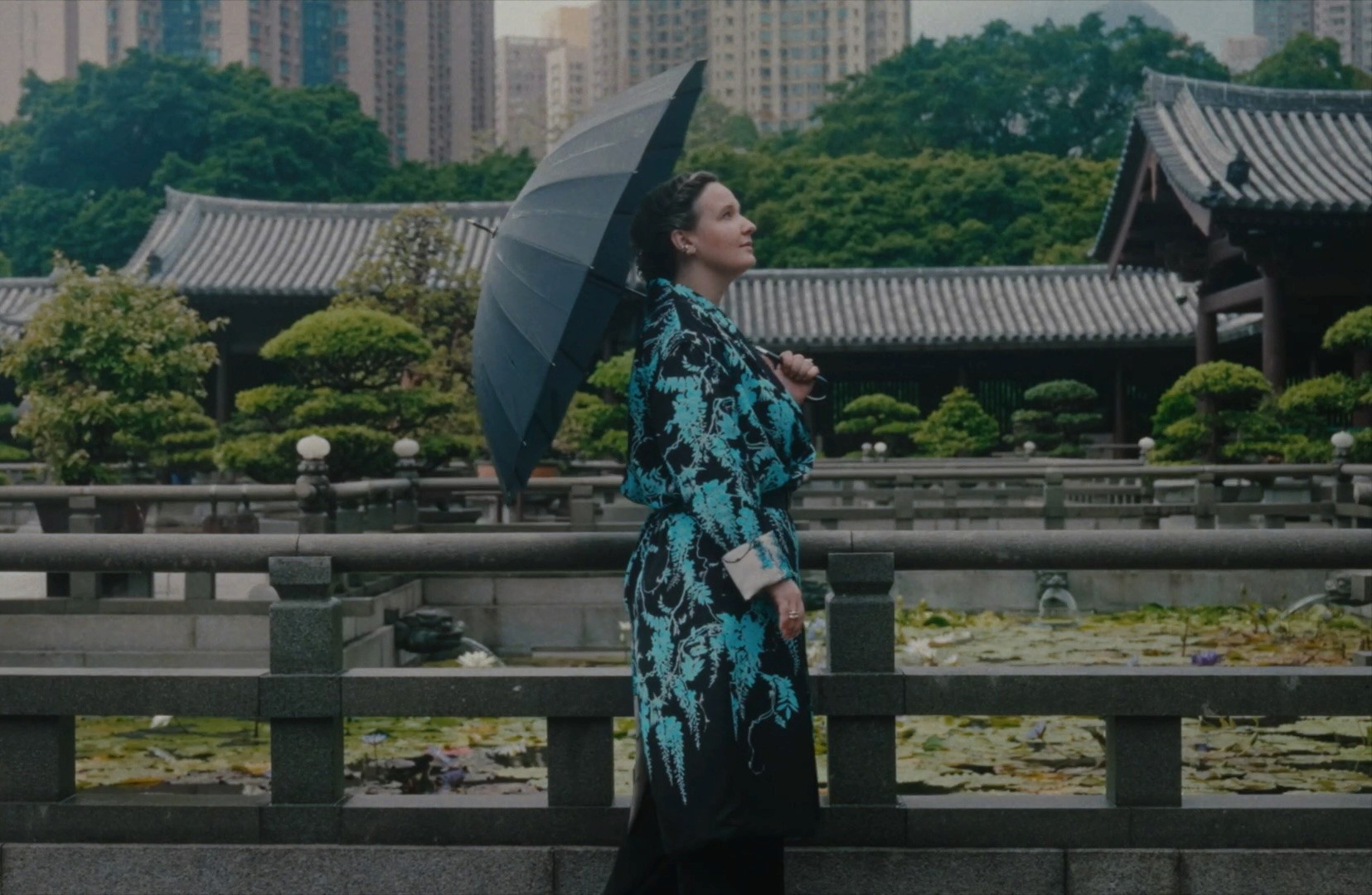
In conversation with architecture and design writer Catherine Shaw, Katerin Theys talks about creating architecture for the body, her instinctive relationship with materials, and the importance of craft, collaboration and adaptability in her work.
Katerin Theys trained as an interior architect in Belgium before moving to Hong Kong in 2013, where her eponymous label was founded in 2019. She describes her approach as “creating architecture for the body”: working through structure, proportion, material and movement rather than conventional fashion codes. Her collections grow as an evolving series of stories, shaped by an instinctive curiosity about textiles, craft and how things are made.
Your background is in interior architecture. How did you come to make clothes?
I came to Hong Kong in 2013 for an internship and stayed. At the time I was working as an interior architect, but textiles had interested me for as long as I can remember. Even as a child in Belgium I was sketching and experimenting with fabric, and from around the age of seven I learnt pattern cutting and sewing from a retired sewing teacher.
In Hong Kong I began making pieces for myself, often using interior fabrics. People would stop me in the street in Hong Kong and Europe to ask about them, and that interest gradually led to the label in 2019. I had no formal fashion training, so I entered that world quite naively. In a way that gave me freedom: I learnt by making, experimenting and following what felt right.
The transition from interiors felt natural because the thinking is similar. In interior architecture you work with proportion, form and structure, and with how a space feels when you occupy it. I still feel I am doing that, only at a different scale. I often describe it as creating architecture for the body.
You often say that the material comes first. How does that work for you?
I need to feel things. I can see a fabric and be interested in it, but until I have it in my hands, until I can understand its weight, construction and what it wants to do, I do not really know it. The moment I hold something, ideas start to come.
Fabric has qualities that you cannot fully understand by looking alone: how it falls, how it holds a shape, how it feels against the skin, what happens when you fold it or turn it. The same form can become something completely different depending on the textile. Its weight, density and construction can change the volume, the movement and even the way the piece occupies space around the body. In that sense, the material is not applied to the design; it helps determine the architecture of it. I am especially drawn to fabrics with layers of stories, such as jacquards, but also to silk and other materials with a strong character of their own.
You often work with materials that were not designed for clothing. What interests you about that?
That is exactly what triggers me: the slightly illogical side of it. I started by making pieces for myself from interior textiles, and I still love the challenge of taking a material out of its expected context.
If a fabric has not been designed for fashion, there is something to discover. You have to respond to its weight, structure or stiffness rather than asking it to behave like a conventional dress fabric. When a material surprises me, or reveals a quality I had not expected, that is often where the most interesting work begins.
You sometimes turn fabrics around and expose what would normally be the reverse. Why?
I work a lot with jacquards, and a jacquard has two sides. The front is the finished face, the one you are supposed to see, but the reverse reveals the construction: the working threads and the structure underneath. I often find that side more beautiful because it tells you something about how the fabric came into being.
That question, how are things made, is something I keep returning to. Sometimes I find only a few metres of an existing fabric, enough for just a handful of pieces or even one. I look closely at both sides before deciding how to use it. Bringing a hidden construction to the surface can give the material another story.
You describe your work as “architecture for the body”. What does that mean in practice?
Form comes before decoration. I am always thinking about silhouette, proportion and how a shape relates to the body beneath it. A pleat, for example, is not simply a detail. A deep, well-placed pleat can make a skirt stand away from the body and give it weight and presence. That is an architectural decision.
I also like pieces to adapt. A piece does not necessarily have to have one fixed form: it can wrap, fold or shift, allowing the person wearing it to interpret it differently over time. I like to leave some space for the wearer in the design. I can create the structure and proportions, but the person wearing the piece completes it through the way they choose to tie, wrap or shape it. For me, that adaptability is also part of longevity. I develop the pieces on my own body and then scale them, thinking less about a rigid conventional sizing system than about proportion, volume and how someone wants to wear a piece: closer to the body or more loosely. I want the clothes to work for different bodies and, above all, to make the person wearing them feel good.
Your collection does not follow the conventional seasonal fashion cycle. How do you think about it?
I create in stories. About twice a year I add a new chapter to what I think of as a living collection. The earlier pieces do not suddenly disappear because a new season begins. They remain part of the collection until they find their owner, while each new story adds another layer and creates new connections with what is already there.
There is already so much fashion in the world. I do not feel there is a need simply to make more things. If I create a piece, I want it to have a reason to exist, whether that comes from the material, the way it is made, the story behind it or the way it can live with someone over time. Working slowly and in small quantities feels right to me.
Collaborating with artists and makers seems central to your work. Has that always been the case?
Yes. One of my first collaborations was with a textile artist who painted flowers by hand for prints used in some of my early pieces, and I continue to love developing prints and ideas with artists and craftspeople.
During my thesis, a mentor gave me an image that has stayed with me. He said to imagine carrying a suitcase into which you put ideas, influences, techniques and conversations. When you open it again, more comes out than you put in. That is how I think about collaboration. Two different creative worlds meet and something emerges that neither person would have arrived at alone.
There is also a strong consciousness of waste and limited production in the way you work. Where does that come from?
I think about it constantly. Sometimes I work with existing or deadstock fabrics and there may be only enough for a few pieces, or even a single one. I like that limitation because it makes you pay attention to what you have.
I am also inspired by ways of making that reduce waste, including made-to-order approaches and pattern cutting where every element is considered carefully. I do not want sustainability to become a slogan. For me it is more fundamental: if something is going to be made, it should be considered, well made and worth keeping.
You use the word “play” a lot when you talk about your process. Is that intentional?
It has to be fun. If I sit down and force myself to solve something intellectually, it usually does not lead anywhere interesting. The best moments happen when I am exploring, with a piece of material in my hands, seeing what it does before deciding what it should become.
Play may sound like a light word, but it is how a lot of my serious work happens. I am completely present and responding to the material rather than forcing it into an idea I already have. Often that is when something unexpected appears.
What do Hong Kong and the wider region bring to the way you work?
Hong Kong has been fundamental to the label, but the making extends beyond the city. There is extraordinary craft and technical knowledge across the region. For example, some of the silk I use comes from Hangzhou, where the hand-rolled edges are also made. That level of specialised skill and finishing is enormously important to me.
There is also a spirit of collaboration and a can-do attitude that I find stimulating. People are willing to experiment and find a way to make an idea happen. At the same time, living here since 2013 has inevitably shaped my eye. The label grew out of bringing together the worlds that formed me: the structure and design culture I grew up with in Europe and the sensibility, materials and making I have encountered in Asia.